
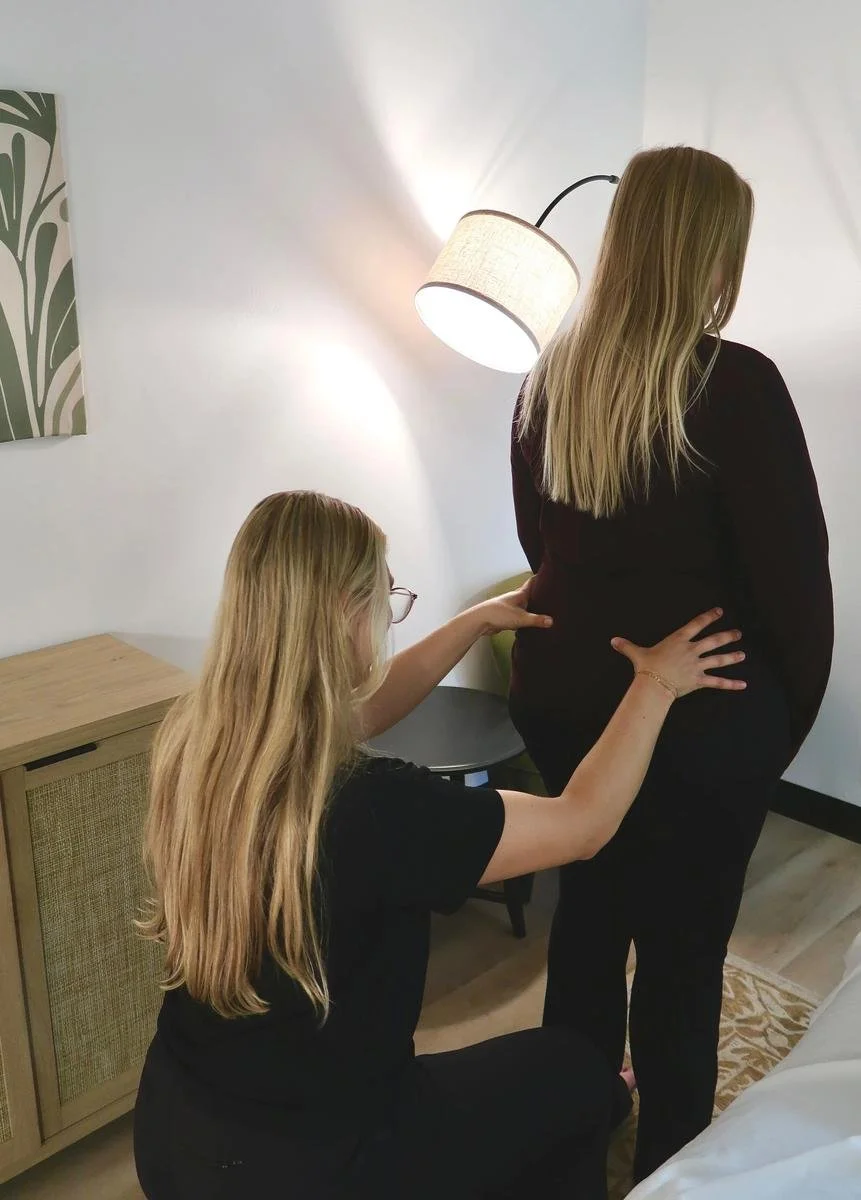
Leaking After Pregnancy? You Don't Have to Live With It.
You crossed your legs before you sneeze. You wear a pad just in case. Leaking is common — but it's not normal, and it's not permanent. Pelvic floor physical therapy can help.
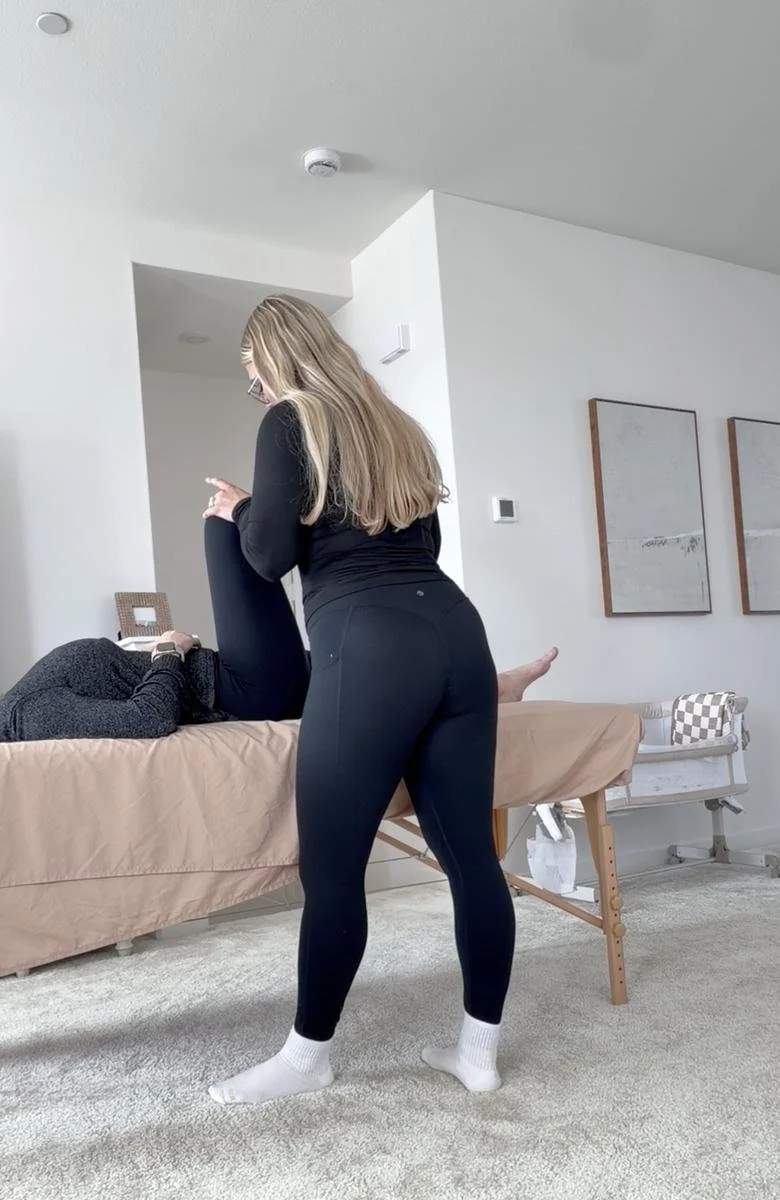
What Is Urinary Incontinence?
Urinary incontinence is leaking that happens when your bladder isn't fully under your control — whether that's a small leak when you sneeze or an urgent rush to the bathroom that doesn't always end in time. It affects 1 in 3 women and is one of the most common reasons new moms seek pelvic floor physical therapy.
There are a few types worth knowing about. Stress incontinence happens when physical pressure — a cough, a sneeze, a laugh, a jump — overwhelms the muscles that support your bladder. Urge incontinence is that sudden, overwhelming need to go right now, and sometimes not making it. Mixed incontinence is a combination of both — and it's more common than either type alone.
Postpartum leaking often involves all of the above. Pregnancy and delivery stretch, compress, and stress the pelvic floor in significant ways. Leaking after having a baby is a sign that your pelvic floor needs support — not a permanent sentence.
The cause is physical. The treatment is physical. And in most cases, it works.
Symptoms
You may have urinary incontinence if you experience:
Leaking when you cough, sneeze, laugh, or exercise
A sudden, intense urge to urinate that's hard to control
Rushing to the bathroom and not always making it
Wearing a pad "just in case" during daily activities
Limiting activities — working out, playing with your kids — because of leaking
Leaking that started or got worse after pregnancy or delivery
Doing Kegels consistently and seeing no improvement
How We Treat It
Contrary to popular belief, the answer isn't always "do more Kegels." In fact, for some women, the pelvic floor is already too tight — and squeezing more makes things worse.
Pelvic floor PT begins with a real assessment: what's happening with your muscle strength, coordination, and tone? Is the issue weakness, overactivity, or poor neuromuscular control? What role is your breathing and core stability playing?
From there, treatment is individualized. It may include:
Targeted pelvic floor muscle training (not just Kegels — coordinated, functional strengthening)
Techniques to address muscle tension if the floor is too tight
Bladder retraining strategies to calm urgency
Guidance on fluid intake, urgency habits, and daily patterns that affect leaking
Breathing and pressure management to stop leaking during high-impact activities
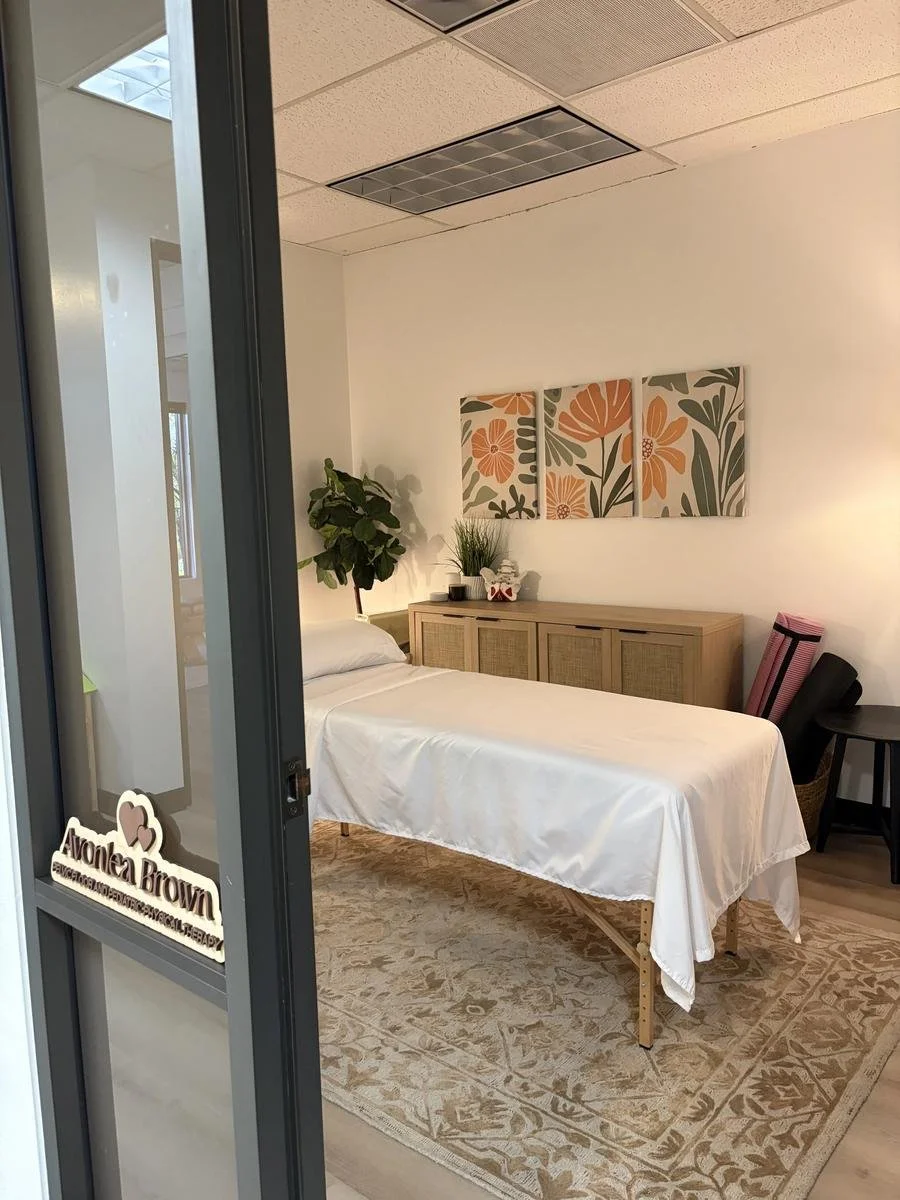
Sessions are 55 minutes, one-on-one with Dr. Avonlea. She sees patients at her office at C+C MotherKin in Costa Mesa and provides in-home visits throughout Orange County — wherever you're most comfortable.
The goal is to get you back to laughing, running, and jumping with your kids without thinking about it first.
Why Choose Us
Dr. Avonlea is one of the only providers in Orange County who specializes in both pelvic floor PT for moms and physical therapy for infants — so if you're dealing with postpartum leaking and also have a baby with torticollis, she can treat both of you. Sessions are 55 minutes, fully one-on-one, with no aides and no shared attention.
She offers in-home visits throughout Orange County and in-office sessions at C+C MotherKin in Costa Mesa. Her whole-body approach means she looks at your breathing, core, posture, and pelvic floor together — not in isolation. If core separation is part of the picture, she also treats diastasis recti as part of the same plan.
Frequently Asked Questions
-
It's common — but "common" and "normal" aren't the same thing. Leaking is a sign that your pelvic floor needs rehabilitation, and it responds well to treatment. The earlier you address it, the better the results.
-
No. Pelvic floor PT can be effective regardless of how long you've been dealing with symptoms. Women make meaningful progress years — even decades — after symptoms first appeared. It's never too late to start.
-
No — internal work is never required. Dr. Avonlea has many ways to assess and treat your pelvic floor using external techniques. If internal work ever becomes part of the discussion, it's always explained in advance and always your choice.
-
No referral is required. California allows direct access to physical therapy, so you can book directly with Dr. Avonlea.
Ready to get relief from urinary leaking?
You don't have to plan your life around your bladder. Let's fix this.