
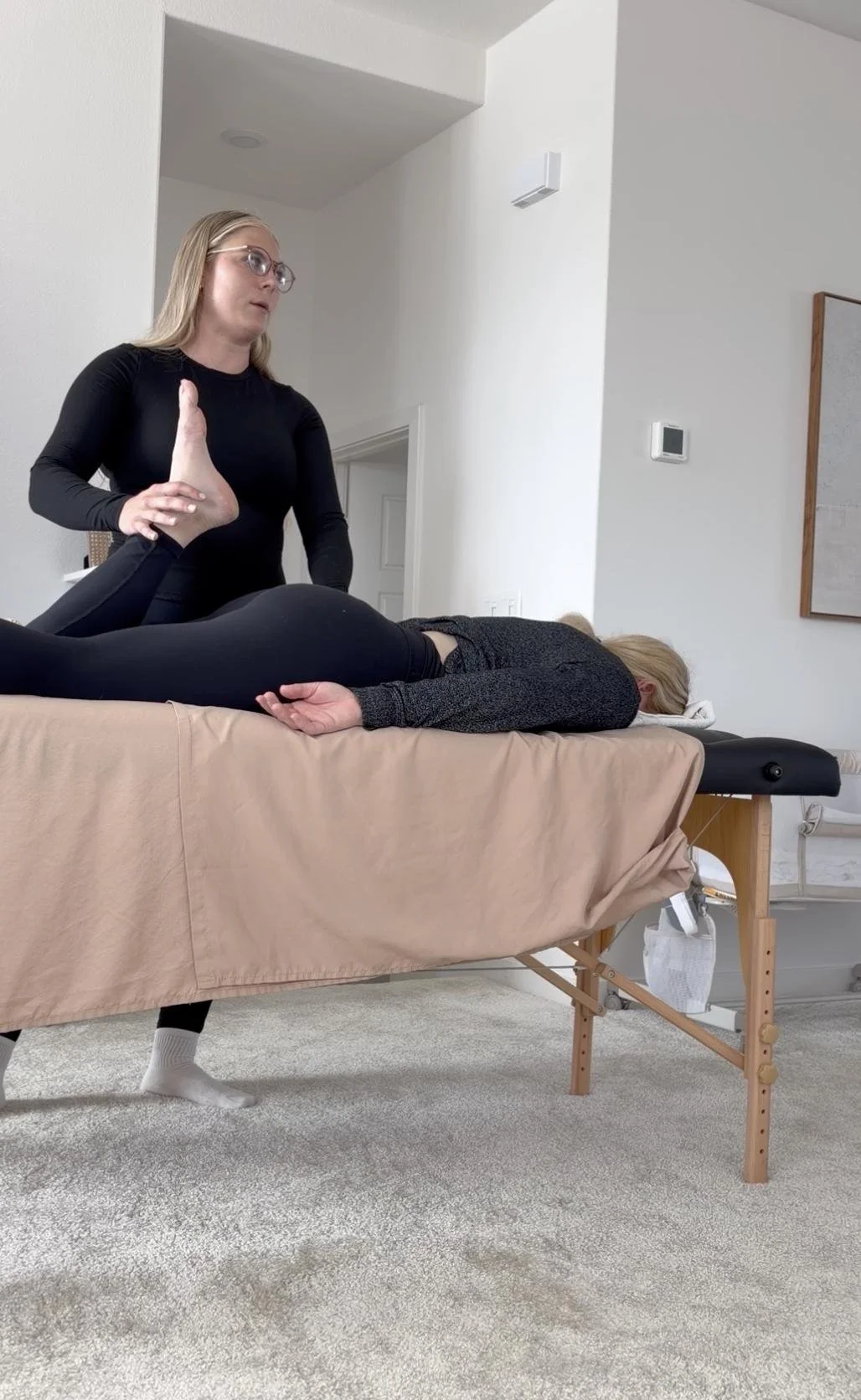
Pelvic Pain After Pregnancy — Finding the Root Cause
You've had tests. Everything looks normal. But the pain is real. Pelvic floor PT — including treatment for SIJ dysfunction and SPD — finds what gets missed and addresses it directly.

What Is Pelvic Pain?
Pelvic pain is a broad term that describes any persistent or recurring discomfort in the lower abdomen, pelvis, hips, tailbone, or groin. It can be sharp or dull, constant or intermittent. It might be worse with sitting, standing, sex, or exercise. It might flare around your period. It might have no clear pattern at all.
In many cases, pelvic floor dysfunction is a central driver — muscles that are too tight, too reactive, or not coordinating correctly can create significant pain that shows up well beyond the pelvic floor itself.
Two of the most common contributors to pregnancy-related and postpartum pelvic pain are SIJ dysfunction (sacroiliac joint dysfunction) — pain at one or both SI joints at the back of the pelvis, often felt in the lower back, buttock, or hip — and SPD (symphysis pubis dysfunction) — pain at the pubic symphysis at the front of the pelvis, often described as sharp, burning, or shooting pain in the pubic area, inner thighs, or groin. Both are very common during and after pregnancy, and both respond well to pelvic floor PT.
Symptoms
Pelvic pain may include:
Sharp, dull, or burning pain in the lower abdomen, pelvis, hips, tailbone, or groin
Pain at the front of the pelvis (SPD) — burning, shooting, or grinding, especially with walking or stairs
Pain at the back of the pelvis (SIJ dysfunction) — lower back, buttock, or hip pain, often worse with rolling over in bed or climbing stairs
Pain with sitting, standing for long periods, sex, or exercise
Tailbone pain, especially after vaginal delivery
Pelvic pressure or heaviness that doesn't have a clear cause
How We Treat It
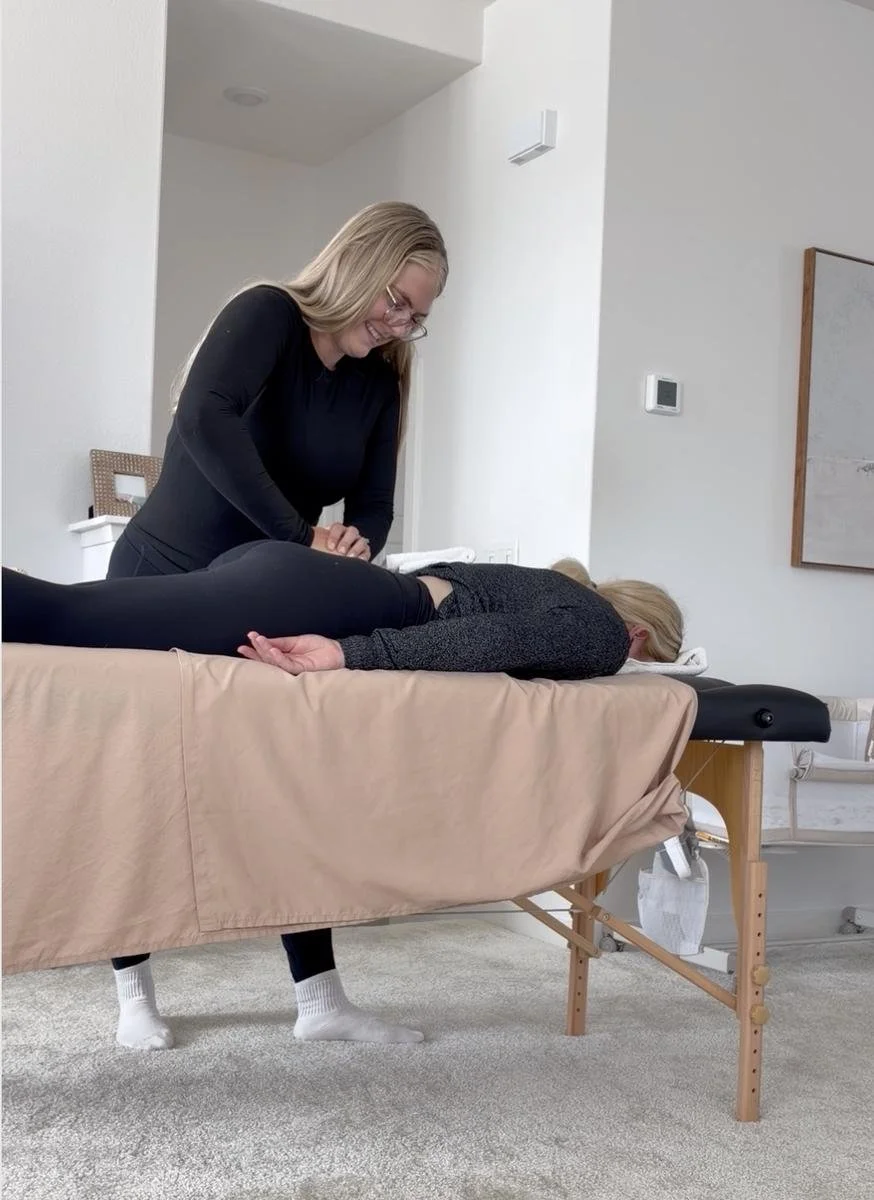
Pelvic pain requires a thorough assessment before jumping to treatment. Dr. Avonlea will evaluate your pelvic floor muscle tone, strength, and coordination; your joint mobility in the hips, sacrum, and lumbar spine; your movement patterns; and how your nervous system is responding to pain signals.
Treatment is individualized and may include:
Manual therapy to release pelvic floor tension and address trigger points
Joint mobilization for SIJ dysfunction or SPD
Tailbone and sacral treatment for coccydynia
Scar tissue mobilization for post-surgical or post-birth scar tissue pain
Nervous system regulation techniques for central sensitization and chronic pain
Movement and postural guidance
Coordination with your gynecologist, midwife, or other specialists
For pregnancy-related pelvic pain — including SIJ dysfunction, SPD, and round ligament pain — Dr. Avonlea works throughout pregnancy to manage pain, improve function, and keep you moving comfortably. Joint pain that started during pregnancy often doesn't automatically resolve after birth, which is why treating it (and not waiting) matters.
Sessions are 55 minutes, one-on-one, in-office at C+C MotherKin or in-home throughout Orange County.
Why Choose Us
Pelvic pain gets dismissed too often — tests come back normal, and women are sent home without answers. Dr. Avonlea's whole-body evaluation looks at the pelvic floor, joints, breathing, movement patterns, and nervous system together — because the source of pain is rarely just one thing. She has specific training in SIJ dysfunction, SPD, and pregnancy-related pelvic girdle pain. Sessions are 55 minutes, one-on-one. She offers in-home visits throughout Orange County and in-office care at C+C MotherKin in Costa Mesa. You deserve real answers, not another "everything looks fine."
Frequently Asked Questions
-
No. Dr. Avonlea can evaluate your symptoms and help determine what's driving your pain. If anything warrants further medical evaluation, she'll let you know. You don't need a diagnosis to start getting answers.
-
Yes. Chronic pelvic pain often has a significant pelvic floor component. PT won't always be the only piece of the puzzle, but it's frequently an important one — and many patients see meaningful improvement in pain, function, and quality of life.
-
Pelvic girdle pain — including SIJ and SPD pain — is very common in pregnancy, but "common" doesn't mean you have to white-knuckle through it. Treatment can make a real difference in how you move and feel day to day.
-
A proper evaluation tells you the difference. SIJ dysfunction tends to present at the back of the pelvis; SPD presents at the front. Both are treatable, and both can be addressed in PT.
Ready to get relief from pelvic pain?
Stop guessing and start getting answers. Let's find the root cause together.